
Static supplier scorecards can’t catch a dynamic risk. Here’s what procurement teams are using instead.
When something breaks in procurement, a late delivery, a cost overrun, a compliance gap, the root cause is almost always upstream, sitting quietly in a supplier relationship no one was watching closely enough.
Most procurement teams are still grading suppliers the same way they did a decade ago: quarterly scorecards, static templates, backward-looking data. But in a climate of cost pressure, ESG mandates, and constant supply chain disruption, reviewing supplier risk once a quarter is like checking the weather once a season.
This article breaks down why traditional supplier performance tracking is failing procurement teams, what AI-enabled supplier intelligence looks like in practice, and the specific metrics top-performing teams now track in real time.
What Is Supplier Intelligence in Procurement?
Supplier intelligence is a dynamic, AI-enabled approach to tracking supplier performance in real time, covering SLA adherence, ESG compliance, pricing consistency, and risk signals from both internal and external data sources. Unlike traditional quarterly scorecards, supplier intelligence gives procurement teams continuous visibility, enabling proactive sourcing decisions instead of reactive damage control.
It’s time to rethink supplier performance
Supplier scorecards haven’t evolved much in the last decade.
Most procurement leaders still rely on static evaluations and rear-view reporting.
But in today’s climate of cost pressure, ESG mandates, and supply chain disruptions, that’s not enough.
You need real-time intelligence, not lagging indicators.
“We can’t just assess supplier performance quarterly and hope for the best. The risk is dynamic. The insight should be too.” — Vera Rozanova, Procurement Advisor & Podcast Guest
The problem with traditional supplier performance tracking
- One-size-fits-all scorecards
- Infrequent performance reviews
- No visibility into ESG metrics or third-party risk
- Fragmented inputs across teams, regions, and tools
And the impact?
Delayed deliveries. Cost overruns. Contract leakage. Missed ESG targets.
The smarter approach: Supplier Intelligence
Modern procurement teams are moving towards dynamic, AI-enabled supplier intelligence systems that:
- Track SLA adherence, issue resolution, and fulfillment delays
- Score vendors based on ESG, pricing consistency, and service levels
- Flag risk early using internal data and external sources
- Enable sourcing teams to make informed, proactive decisions
With the ewiz procure, these insights are integrated into every step, from onboarding to sourcing to contract review.
What this looks like in practice
Imagine your dashboard showing:
- Which vendors are missing SLA targets in specific regions
- Which categories show the highest pricing variance
- Where ESG performance is slipping, and why
- Who your most strategic vs. risky suppliers are, with suggestions
All updated in real-time. Across locations. No spreadsheets.
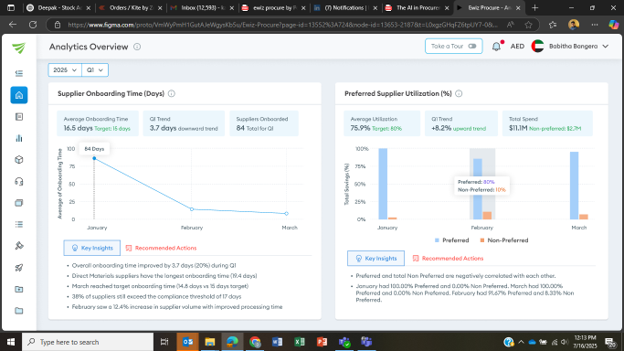
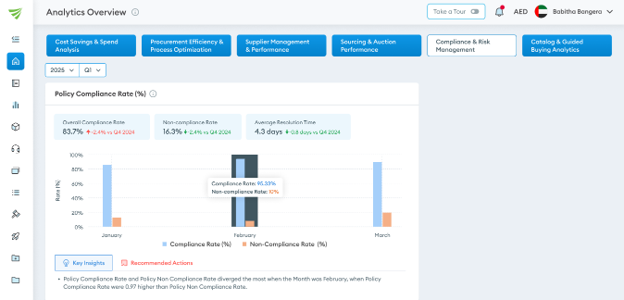
Here are some key metrics that top-performing teams track using ewiz procure’s analytics module:
Supplier Onboarding Time
Shorter onboarding means faster time-to-supply and fewer delays.
Preferred Supplier Utilization
Higher preferred spend reduces maverick buying and enforces negotiated contracts.
Policy Compliance Rate
Tracks how well suppliers align with organizational standards, helping flag risks.
📌 Want to explore the complete Analytics module?
Click here to check out the full demo.
Real-world impact: Inside the AI in Procurement Guide
This is one of the high-impact use cases we explore in our new guide, featuring 5 real-world applications and 10 success stories.
Whether you’re building your first business case or scaling your third AI initiative, this guide helps connect action to ROI.
Why this matters now
- 69% of procurement leaders say supplier performance tracking is reactive and incomplete
- AI-enabled supplier intelligence reduces SLA violations by up to 25% (The Hackett Group, 2024)
- ESG-related supplier noncompliance is the #1 emerging risk for global sourcing teams
It’s not just about visibility. It’s about foresight.
Beyond Procurement by Powerweave
We help enterprises rethink procurement and sustainability with purpose-built modular solutions like ewiz procure and Snowkap. Want to explore what this could mean for your team or where to start?
No pitch decks, just a real conversation.
