
Enterprise procurement transformation doesn’t always require replacing your ERP.
Many organizations assume that scaling procurement means embarking on a costly, multi-year ERP transformation. In reality, the biggest barriers often lie elsewhere, fragmented sourcing processes, disconnected supplier ecosystems, manual workflows, and limited visibility.
In this article, we take you inside a real-world transformation: how a global merchandise company digitized sourcing and fulfillment across seven countries, 80+ custom sourcing portals, and millions of transactions, without ripping out its ERP.
The Challenge: Scaling Procurement on Manual Foundations
Despite being a market leader, the organization was operating its global sourcing network on fragmented and largely manual processes.
As the business expanded across regions, procurement teams struggled to keep pace with increasing operational complexity.
Key challenges included:
- Manual workflows for sourcing, inventory, and warehousing that slowed business growth
- Multiple disconnected systems with no real-time visibility into stock levels or demand
- No buy-on-demand capability, resulting in inefficient inventory planning
- Weak forecasting due to fragmented procurement data
- Limited visibility into demand trends across product categories and geographies
These challenges are familiar to many enterprises across industries such as FMCG, manufacturing, retail, and construction, organizations that rely heavily on ERP systems, manage extensive supplier networks, and must meet growing ESG and compliance expectations.
The challenge wasn’t the ERP itself.
It was everything happening around it.
The Solution: Digitizing Procurement Without Replacing the ERP
Rather than pursuing a costly ERP replacement, the organization chose a modular approach.
Using ewiz procure, it built a connected sourcing ecosystem that integrated seamlessly with existing enterprise systems while standardizing procurement processes across the business.
The transformation included:
- 80 custom sourcing portals designed for different business units and brands
- 100+ product categories consolidated into standardized procurement catalogs
- 28,000 SKUs onboarded with real-time inventory synchronization from supplier systems
- ERP-native integration enabling seamless purchase orders, product mapping, and demand-linked stock triggers
- Enterprise-grade governance with Single Sign-On (SSO), Role-Based Access Control (RBAC), audit trails, and compliance aligned with ISO 27001 and SOC 2
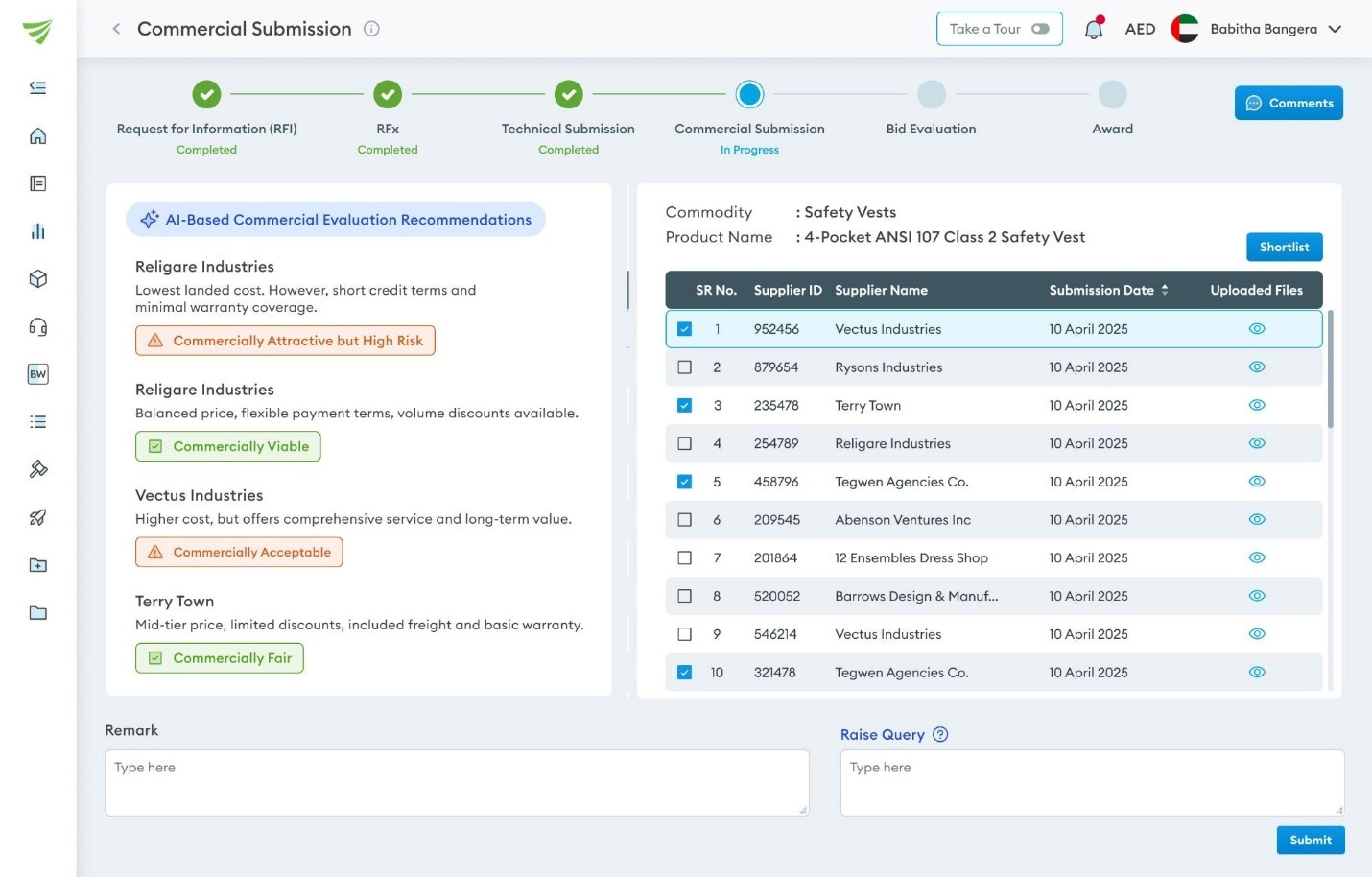
Instead of forcing procurement teams to adopt entirely new ways of working, the solution connected the systems that already mattered:
- Suppliers
- Inventory
- ERP
- Procurement workflows
Manual approvals, price expiry monitoring, and stock allocations were automated, while buyers received a familiar, Amazon-like purchasing experience with multilingual and multicurrency support.
The outcome was a procurement ecosystem designed to scale without disrupting existing enterprise operations.
Why it worked: ewiz procure connected what mattered (suppliers, stock, ERP), removed rework (approvals, price-expiry flags, allocations), and made the buyer experience simple (Amazon-like UX, multi-language/currency).
Click below to watch the Strategic Sourcing module Demo
Strategic Sourcing in ewiz procure
The impact: measurable outcome at scale
Within less than a year, the procurement transformation delivered measurable business outcomes across the organization.
Key achievements included:
- More than 1 million procurement transactions annually, fully integrated with the ERP
- 80 sourcing portals supporting multiple business units
- 100+ product categories consolidated into standardized catalogs
- 28,000+ searchable SKUs with live supplier inventory synchronization
- Operations successfully rolled out across 7 countries with localized language and currency support
Together, these improvements enabled procurement teams to move away from reactive firefighting and toward proactive planning.
Instead of managing disconnected systems and manual processes, teams gained the visibility and control needed to balance agility, governance, and business growth.
Before ewiz procure, we were navigating chaos—manual orders, missed reorders, no visibility. This solution has completely overhauled how we run sourcing and fulfillment. Now we operate with agility, precision, and predictability across global accounts.
— Head of Operations, Global Merchandise Company (Name withheld due to confidentiality)
Download the full case study here
The adoption: experience + governance
Procurement transformation rarely fails due to design; it fails due to adoption.
This program prioritized both:
- Experience: intuitive UX, mobile-ready flows, localized rollouts in 7 countries
- Enablement: dedicated adoption manager, short functional sessions, supplier registration playbooks
- Support: in-app guidance, searchable knowledge base, refresher training and helpdesk
→ Result:
Users benefited from in-app guidance, searchable knowledge bases, refresher sessions, and continuous helpdesk support.
The result was a system people wanted to use because it aligned with the way they already worked, while embedding governance in the background instead of making compliance a barrier.
The ewiz procure approach
What made this transformation possible wasn’t another bolt-on tool, it was ewiz procure’s ERP-native, modular architecture. Instead of forcing new workflows or heavy integrations, it plugged into existing systems and scaled globally with:
- ERP-native integration → zero rip-and-replace, seamless rollout across 7 countries
- AI-powered automation → demand-linked triggers, supplier sync, and real-time inventory visibility
- Embedded governance → ISO 27001, SOC 2, and role-based controls baked in
- Frictionless adoption → Amazon-like UX and dedicated success managers driving usage at scale
For procurement leaders, that translates into outcomes that matter:
- 5–15% savings on spend through automation and consolidation
- 50% faster cycles in sourcing and onboarding
- 3× productivity gains, freeing teams from transactional bottlenecks
Key Lessons for Procurement Leaders
This transformation offers several practical lessons for organizations planning their own procurement modernization journey.
AI Requires Strong Operational Foundations
Artificial intelligence delivers value only when procurement data and workflows are reliable.
Standardized catalogs, live inventory, governed approvals, and clean master data create the foundation that allows AI to improve decision-making.
Modular Transformation Beats Monolithic Replacement
Organizations don’t need to replace their ERP to modernize procurement.
Adding targeted capabilities where they create the greatest business impact allows faster implementation with significantly lower risk.
Adoption Should Be Designed, Not Assumed
Technology succeeds when people embrace it.
Consumer-grade user experiences combined with embedded governance drive adoption far beyond a small group of power users.
Final Thoughts
Large-scale procurement transformation doesn’t always require replacing core enterprise systems.
Often, the biggest opportunity lies in connecting what already exists, simplifying user experiences, and digitizing the processes surrounding the ERP.
This global merchandise company demonstrates that organizations can modernize procurement at enterprise scale by combining modular technology, ERP-native integration, intelligent automation, and user-first design.
The result is not just greater operational efficiency, it is a procurement function equipped to support growth, improve visibility, strengthen governance, and scale confidently across global operations.
At Powerweave, we help enterprises modernize procurement and sustainability through purpose-built solutions like ewiz procure and Snowkap.
Whether you’re looking to improve sourcing visibility, streamline supplier collaboration, or extend the value of your existing ERP, we’re here to help.
No pitch decks, just a real conversation.
