
The promise of AI in procurement has hit a stubborn wall. The promise of AI in procurement has collided with a stubborn reality: 95% of enterprise AI pilots deliver no measurable ROI, according to MIT’s 2025 State of AI in Business study, even after $30–40 billion in enterprise investmentt. Most teams are stuck in proof-of-concept, unable to scale beyond the pilot.
The instinct is to blame the model. The real issue is the environment you are dropping it into. Procurement systems were built for control, compliance and record-keeping — not for the flexible, data-hungry workloads modern AI needs.
This blog explains why AI stalls in monolithic procurement systems, what modular procurement is, and the two-horizon operating model that lets you get AI ROI without ripping out your ERP.
Key takeaways
- MIT’s 2025 study found 95% of enterprise generative-AI pilots delivered no measurable P&L impact, after $30–40 billion of investment. The problem is rarely the model, it’s the environment.
- Modular procurement creates clean, controlled, AI-ready layers on top of your existing ERP, instead of a multi-year platform replacement.
- The same MIT research found AI bought from specialized vendors succeeds about 67% of the time, versus internal builds at roughly a third of that rate.
- Lead with quick-win layers (catalog, onboarding, sourcing, spend analytics) in the first 12 months, then shift to domain-based ownership over 2026–2028.
Modular procurement is the answer to the 95% problem. Instead of replacing your ERP or forcing an organization-wide transformation, you stand up purpose-built layers — catalog, supplier onboarding, sourcing, compliance, spend analytics — that each generate structured, AI-ready data by design, then connect into your existing systems. AI doesn’t fail because it is weak; it fails because monolithic environments hand it fragmented, siloed, inconsistent data. Build a clean layer first and the same algorithms start working. The MIT research points the same way: AI bought from specialized vendors succeeds about 67% of the time, while internal builds succeed at roughly a third of that rate — focused, purpose-built capability beats sprawling do-it-yourself.
Why AI fails in traditional procurement environments
Traditional procurement systems were never designed for AI. They were built for control, compliance, and record-keeping, not for the flexible, data-hungry workloads that modern AI requires.
SAP Ariba, Coupa, Jaggaer, GEP SMART, Ivalua, these are powerful platforms. They’ve been the backbone of enterprise procurement for 15+ years.
But they were architected in the 2000s-2010s, when “integration” meant connecting to your ERP, not training an LLM on your spend data.
When we analyzed 3+ years of user reviews (2022-2025) from G2, Capterra, Gartner Peer Insights, and Reddit’s r/procurement community.
A clear pattern emerged. Procurement teams don’t lack features, they lack the AI foundations to use them.
The pattern from user reviews (2022-2025):
Ariba: “Integration with non-SAP systems is difficult”, meaning data stays locked in silos, exactly where AI can’t reach it.
Coupa: “Long implementation time” + “missing features for reporting, requisitions”, meaning 12-18 month rollouts and rigid workflows that don’t flex for AI experimentation.
Jaggaer: “True workflow doesn’t really exist”, meaning manual workarounds and disconnected processes that AI can’t orchestrate.
GEP SMART: “Building on a broken foundation” + “limited connectivity between core modules”, meaning even the platform’s own modules don’t talk to each other cleanly, let alone third-party AI tools.
Ivalua: “Frequent performance issues and time out errors”, meaning system instability that makes real-time AI inference unreliable.
Three fundamental barriers prevent AI from functioning effectively:
1. The data is fragmented beyond repair
Enterprise procurement teams across regions operate with supplier records scattered across multiple ERPs. Thus:
- Supplier names vary across business units.
- SKU descriptions are non-standardized.
- Contract metadata isn’t digitized.
- PR > PO > GR > Invoice data flows aren’t linked cleanly.
This is consistent with what ewiz procure encountered in real deployments.
For example, a global beverage enterprise had to standardize 8,496 SKUs into a unified taxonomy before catalog automation could function.
This improved supplier performance insights with 65%+ SKUs now tied to verified manufacturer data, revealing 22% hidden spend previously lost in uncategorized buckets.
And this is the core misconception around AI in procurement:
AI doesn’t fix this.
AI needs this fixed before it starts.
If the data is fragmented, duplicated, or labeled differently across ERPs, AI doesn’t clean it; it magnifies the mess. You end up with conflicting recommendations because the model treats the same item as multiple items.
2. Workflows are rigid when they should be adaptive
Big-bang ERP implementations require process standardization that can take years to achieve.
The researchers discovered a “learning gap”: people and organizations simply did not understand how to use AI solutions properly or how to design workflows that could capture their benefits.
Generic tools like ChatGPT work brilliantly for individuals but stall in enterprise settings because they don’t learn from or adapt to organizational workflows.
Typical problems:
- Rigid approval sequences with no conditional logic
- Sourcing events are structured differently every time
- Manual spreadsheet-based evaluations
- PDF-based onboarding and compliance checks
3. Monolithic platforms require organizational maturity; most companies don’t have
Most organizations now manage almost 1,000 apps in their tech stacks, cobbling together ERP modules, AP automation tools, and contract repositories.
The result? Data silos and workflow disconnects that AI can’t navigate.
Modular environments reverse this: you fix domains first, then scale.
When companies bought AI solutions from specialized vendors, they succeeded about 67% of the time, while internal builds succeeded only one-third as often.
How modular layers fix this
Modular procurement layers represent a fundamentally different architecture. Instead of replacing your ERP or forcing organization-wide transformation, they create clean, controlled environments where AI can actually function, then integrate seamlessly into existing systems.
These layers work because they’re purpose-built for specific procurement capabilities:
- Catalogs
- Sourcing cycles
- Supplier onboarding
- Compliance workflows
- Tail-spend tracking
Each layer generates structured, AI-ready data by design.
- When a catalog layer standardizes product taxonomies, AI can identify consumption patterns.
- When a supplier onboarding layer creates consistent data fields, AI can assess risk accurately.
- When a sourcing layer systematically captures decision criteria, AI can learn what makes evaluations successful.
The modular approach succeeds because it solves specific procurement challenges without replacing existing systems.
Why 2026 is the inflection point
Three converging forces make 2026 the year of modular procurement layers.
- CFOs demand predictable ROI under severe budget constraints
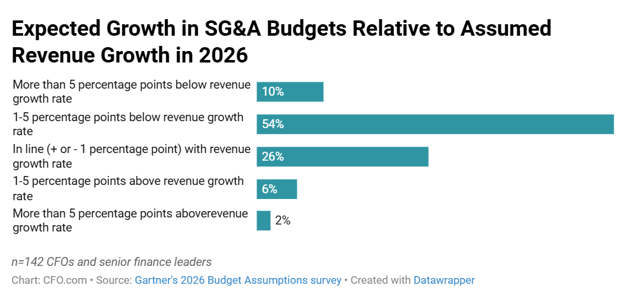
54% of CFOs expect their selling, general, and administrative expenses to be about 1-5% below their expected revenue growth rate.
CFOs are “protecting the downside” and being “really careful about what they must spend versus what is a ‘nice-to-have,'” according to McKinsey’s Kevin Carmody.
They want fast wins with measurable impact, not multi-year platform transformations. Modular layers deliver this: focused capabilities that show value in quarters, not years.
- AI goes mainstream and exposes platform limitations
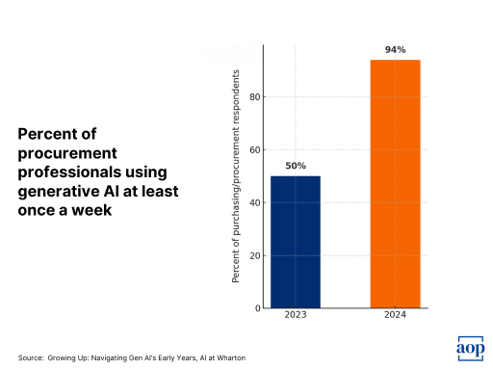
80% of CPOs prioritize AI investments, with 94% of procurement executives using generative AI weekly.
As adoption accelerates, the infrastructure gap becomes impossible to ignore. Organizations are discovering that throwing AI at bad data produces bad decisions faster.
The layered approach directly addresses this by creating the clean data infrastructure AI needs to succeed.
3.Procurement needs agility that platforms can’t provide
CPOs identify data and analytics technologies as a top priority, with procurement shifting from cost center to strategic partner.
But traditional platforms update on 18-month roadmaps that can’t keep pace with AI innovation.
Modular layers let procurement adopt new capabilities without waiting for vendor release cycles or re-implementing core systems.
A strategic operating model for CPOs in 2026
The shift to modular, AI-powered procurement requires a two-horizon strategy that balances quick wins with long-term transformation.
Quick wins (0–12 months)
The first horizon focuses on where teams will see measurable outcomes fast, capabilities that deliver value before they require cultural change.
Catalog standardization
Implement a catalog layer that normalizes product taxonomies, creating the foundation for AI to identify consumption patterns, spot tail spending, and suggest consolidation opportunities.
By using ewiz procure, based on deployments like for a global beverage giant, where SKU normalization unlocked automated procurement flows.
Outcomes:
- Reduced price variance
- Reduced maverick spend
- Catalog-level compliance monitoring
Automated supplier onboarding
Deploy a supplier onboarding layer that
- Captures consistent data fields,
- Validates information automatically,
- Creates searchable taxonomies.
Click below to see it yourself
AI-assisted sourcing evaluation for faster cycles
Introduce a sourcing layer that
- Structures evaluation criteria,
- Captures scoring systematically,
- Uses AI to identify weighting patterns and flag outliers.
Click below to see it yourself
Tail-spend visibility
Add a spend analytics layer that classifies transactions, identifies compliance gaps, and tracks policy adherence.
The long-term operating model (2026–2028)
The second horizon addresses how leaders must restructure people, systems, data, and governance for sustained AI impact.
Capability ownership shifts to layered domains
Move from monolithic platform thinking to domain-based ownership. Different teams own catalog, supplier, sourcing, and analytics layers, with clear accountability for data quality and functional outcomes.
This distributed ownership enables faster iteration and better fits how procurement actually operates.
Procurement becomes data + intelligence steward
Modular stack replaces platform roadmap
Strategic planning shifts from negotiating with platform vendors to composing best-of-breed layers.
Organizations gain the ability to swap capabilities without replacing core systems, adopting new AI innovations as they emerge rather than waiting for vendor integration.
AI becomes continuous, not a one-time rollout
Build feedback loops where AI learns from procurement decisions and procurement learns from AI performance.
This requires governance frameworks that balance automation with human oversight, clear escalation paths when AI confidence is low, and metrics that measure both efficiency gains and decision quality.
Lead 2026 now
AI will not rescue poorly architected procurement systems. The technology is ready, but most environments aren’t.
Modular layers solve this by creating environments where AI can function effectively while preserving the ERP.
Gartner predicts that by 2026, 60% of procurement functions will have fully integrated AI-driven analytics.
For CPOs, the strategic choice is clear: lead with layers in 2026.
Ready to build your modular procurement stack?
Book a Discovery Call with the ewiz procure team
In 30 minutes, we’ll surface:
- The friction slowing your package cycles
- Where suppliers are creating hidden risk
- Where documentation is breaking the process
- And what immediate wins you can unlock within weeks
