
Across the GCC, construction procurement teams are being asked to run 2025-scale tender volumes on tools designed for a slower era: spreadsheets, email threads, and shared folders. The pipeline isn’t the problem, the process is. When a single tender takes three to four months to run manually, and a firm has dozens live at once, the math stops working long before the team does.
This is the quiet bottleneck behind lost bids, supplier drop-off, and compliance exposure in one of the world’s fastest-moving construction markets.
When Abu Dhabi approved $18 billion in infrastructure projects in Q1 2024, procurement teams at firms like Al Naboodah Construction, ASGC, and Dutco Balfour Beatty didn’t celebrate; they PANICKED.
And it’s not because they’re bad at their jobs. It’s because they’re trying to manage 2025 project volumes with 2015 tools. Specifically: Excel, email, and pure chaos.
So, here’s what is really happening.
TL;DR:
- GCC construction volume has surged, Saudi giga-project contract awards reached $196B, up 20% (Knight Frank, 2025), while many contractors still run tenders on Excel and email.
- A manual tender cycle of 12–15 weeks, multiplied across dozens of active tenders, is arithmetically impossible for a lean procurement team.
- Digital eTendering compresses cycle time, keeps every supplier interaction in one auditable place, and lifts bid participation, turning responsiveness into a competitive advantage.
- Dubai Law No. 7 of 2025, in force since 8 January 2026, tightens contractor registration, classification, and record-keeping, making documented, auditable procurement a compliance requirement, not a nicety.
The turning point is here. Procurement directors across the GCC are realizing a tough truth: manual tendering can’t keep up with the massive surge in new projects.
Companies that don’t go digital now risk falling behind by Q2 2026.
The GCC (Gulf) Construction wave, everyone is struggling to keep up with
Here is something to prove it:
- Saudi Arabia’s mega-projects awarded $196 billion in contracts in 2025, a 20% jump year-over-year
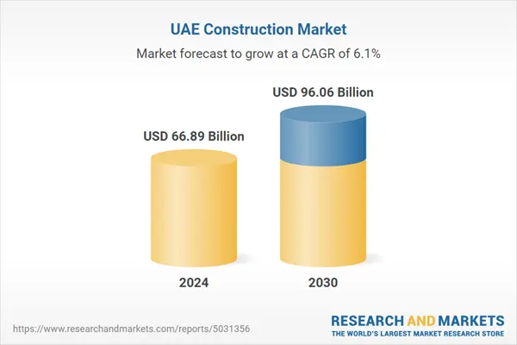
- UAE’s construction market is projected to grow from $66.89 billion in 2024 to $96.06 billion by 2030 at a 6.06% CAGR
- Companies like Al Naboodah Construction, ASGC, and Dutco Balfour Beatty are seeing 2x to 3x more tender opportunities than they had capacity for
Sounds great on paper. But behind the scenes?
- Week 1-3: Draft the EOI (Expression of Interest), manually email it to suppliers
- Week 4-6: Answer supplier questions via email (usually the same questions, over and over)
- Week 7-9: Receive bids via email, save them to folders, distribute to evaluators
- Week 10-12: Pass around Excel sheets between 6-8 people for scoring, deal with version control nightmares
- Week 13-15: Chase down approvals, get physical signatures, finalize contracts
Total time: 12-15 weeks. For ONE tender.
Now multiply that by 40 active tenders.
Do the math. That’s basically impossible with a small procurement team.
| Ahmed Raafat, a regional procurement transformation leader with two decades across GCC and North African enterprises, shared a story:
“The biggest challenge isn’t the system or the supplier, it’s alignment. Procurement teams often work in silos, disconnected from finance, projects, and operations. Without that internal collaboration, even the best technology won’t deliver value..” |
We recently had an insightful discussion with him, you can listen to the full podcast HERE
Why now? The 3 forcing factors
You’re losing bids to faster competitors
One major Dubai contractor recently lost a AED 300 million infrastructure project. Not because their price was bad. Not because they weren’t qualified. They lost because their tender response took 14 weeks.
The winner? They submitted in 6 weeks. They respond to RFIs 30-40% faster.
The client literally said “responsiveness and procurement maturity” were deciding factors.
Speed is now a competitive advantage. And if you’re stuck in Excel, you’re slow.
Suppliers are dropping out
When your tender process takes 3-4 months and communication is a black hole of email, guess what happens?
Suppliers give up. You start with 50 interested companies. By the time you get to final bids, 8 actually submit. That’s an 84% dropout rate.
Fewer bids = less competition = higher prices = lower margins.
Not focusing on compliance risk
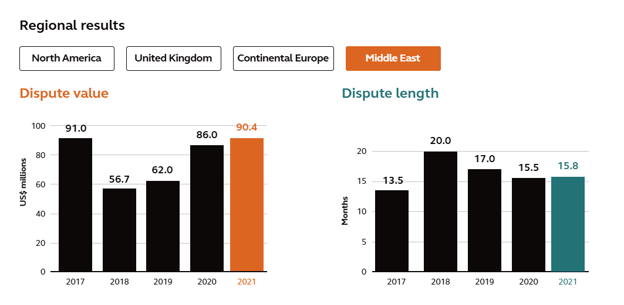
Construction projects have disputes, and they’re expensive. In the Middle East, the average construction dispute is worth $90.4 million and takes 15.8 months to resolve.
But when a supplier claims you manipulated their bid or unfairly disqualified them, and all you have are scattered emails and Excel sheets with no timestamps?
You’re in trouble. Settlements range from AED 2-8 million when you can’t prove your process was fair.
And with Dubai’s new Law No. 7 of 2025 increasing compliance scrutiny, audit trails are no longer optional. They’re survival.
What leaders are doing differently
Some GCC construction firms, especially those winning major Saudi mega-projects and UAE infrastructure contracts, have figured out what really drives performance.
You can’t scale Excel. But you can scale systems.
They’re making three big changes:
Change #1: Stop treating every tender like it’s Brand New
Old way: Start from scratch every time. Create a new folder. Draft new emails. Build new spreadsheets.
New way: Use master tender templates with automatic sub-tenders.
- Example: You’re bidding on an AED 500 million mixed-use development. Instead of managing five separate tender processes (main contract, MEP, façade, interiors, landscaping), you launch ONE master tender that automatically creates structured sub-tenders.
All suppliers get consistent documents. Timelines sync up automatically. Your team manages it from one dashboard instead of juggling five Excel files.
Platforms like ewiz procure make this stupid-easy. You set it up once, replicate it dozens of times.
Change #2: Let AI do the boring stuff
Technical construction tenders are massive. We’re talking 100-300 pages of specs, drawings, and compliance docs. When 20 suppliers submit bids, that’s potentially 6,000 pages your team has to review.
Manually. On weekends. While their kids are asking why mom or dad is always working.
Now imagine this: AI reads all 6,000 pages in 10 minutes. It generates 3-page summaries for each bid. It flags which suppliers meet mandatory requirements. It highlights risky contract clauses. Your evaluation time goes from 40 hours to 6 hours.
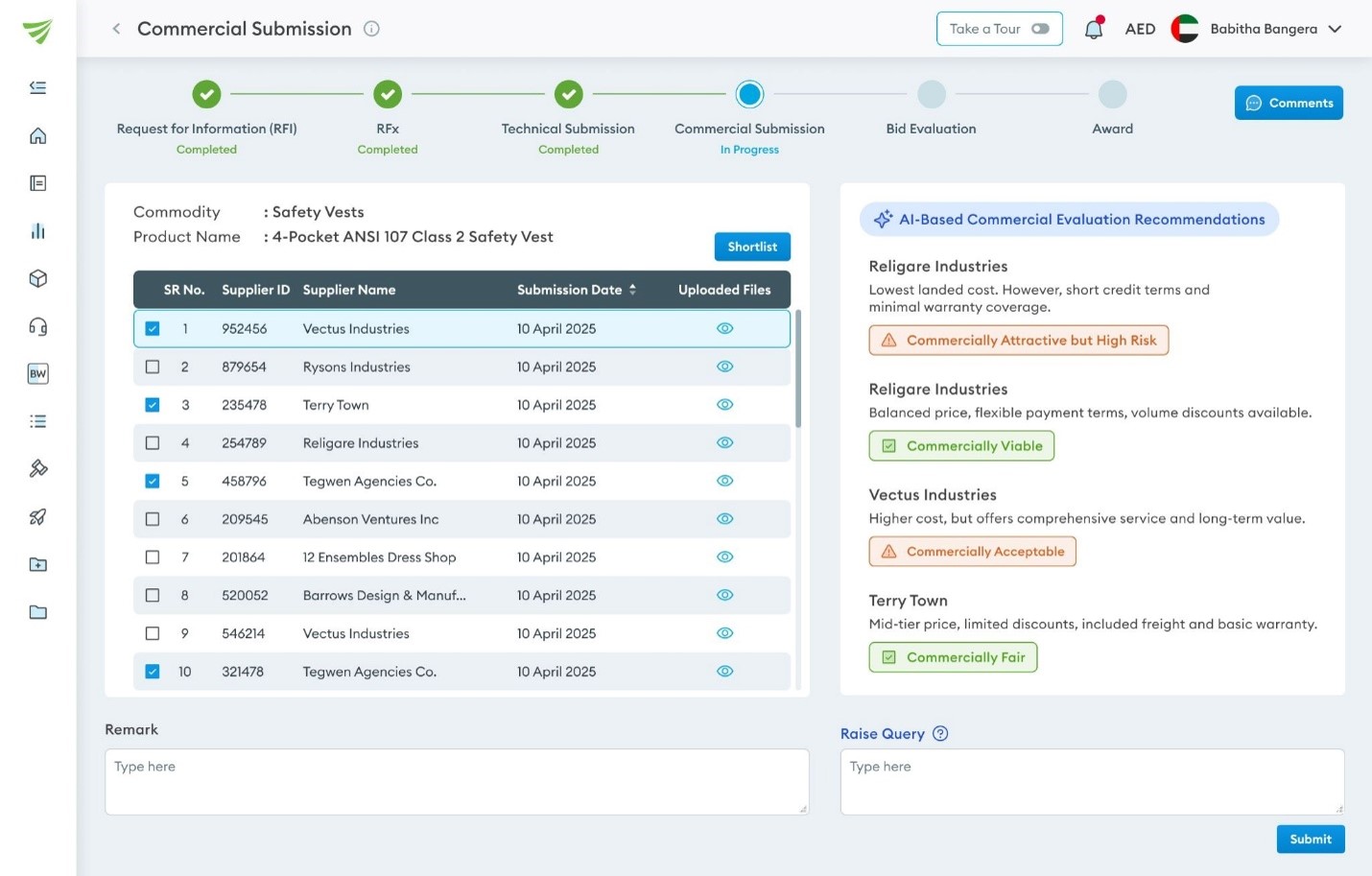
Technical tenders in construction routinely involve 100-300 pages of specifications, drawings, and compliance documents. Manually reviewing 20 supplier submissions means 2,000-6,000 pages per tender.
Click below to check out the full demo.
Change #3: Kill email for tendering (Seriously)
The most sophisticated GCC contractors have eliminated email entirely from tendering.
All supplier communication: RFIs, clarifications, document exchanges, happens through centralized portals.
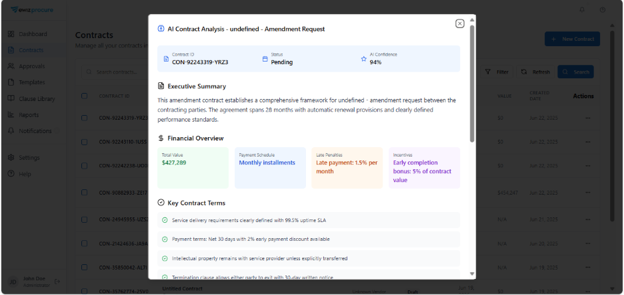
For suppliers:
- They see all questions and answers from all bidders (no information advantage for anyone)
- They get automatic notifications instead of checking email
- They can track exactly where they are in the process
For you:
- Zero inbox chaos
- Complete audit trail, every message timestamped and searchable
- Way fewer repetitive questions (suppliers see others’ questions already answered)
- Dispute-proof documentation
The results? Suppliers submit 40% fewer clarification requests. 85% actually submit final bids (vs. 60% with email). Meanwhile, finance and board leaders have real-time visibility into every tender complete audit trails, approvals, and documentation at their fingertips.
Why regional contractors choose ewiz procure
Doesn’t replace your existing systems
Most procurement platforms need a full system overhaul or messy ERP integrations. ewiz procure doesn’t. It’s modular; you can add AI sourcing, eAuctions, or spend analytics to your existing setup without replacing anything.
No rebuilds. No long projects. Just plug in what you need, see results fast, and grow at your own pace. And with our flat-fee model, you can add any number of users or suppliers, no hidden per-seat costs. Start small. Connect fast. Scale easily.
It actually understands construction tendering
Construction isn’t like buying office supplies. You have:
- Pre-qualification rounds
- EOIs
- Technical tenders
- Financial tenders
- Sub-contractor cascades
ewiz procure’s E-Sourcing module handles all of it natively. The workflow engine knows what comes next and automates transitions.
They show up in person
In-person demos in Dubai and Abu Dhabi. Not just Zoom calls from someone in another country who doesn’t understand GCC construction. They speak your language (literally, Arabic support included). They understand DCD requirements, Etimad portal needs, local compliance.
Try before you buy
30-day free pilot. Pick one upcoming major tender. Run it through ewiz procure. See if it actually delivers. Most firms see ROI during the pilot.
What happens to firms that wait?
The 2026 dividing line
By Q2 2026, there will be two types of GCC construction contractors:
Type A: Digital-first firms with structured eTendering, AI-powered bid evaluation, and supplier portals. They’ll handle 2-3x the tender volume of competitors, respond 50% faster, and win bids on procurement maturity as much as pricing.
Type B: Excel-dependent firms drowning in administrative overhead, working weekends to keep up, losing bids to faster competitors, and facing increasing compliance risk.
The gap between these two? It’s going to be massive and permanent.
It can deliver productivity gains of 14-15% and cost reductions of 4-6% when done well.
The tools exist today. The ROI is proven. Your competitors are already moving.
So what now?
If you’re a procurement director, head of contracts, or project director at a GCC construction firm, here’s the question:
Can you afford to wait another quarter?
Saudi’s pumping out $196B in contracts. Abu Dhabi’s got $18B in the pipeline. Your tender volume is only going up.
Your current process wasn’t built for this scale. And honestly? Your team is probably already telling you that.
▶ Take the first step
Not sure if digital tendering is right for your firm? Let’s just talk.
ewiz procure offers a free discovery call for GCC construction firms: a real conversation about what’s actually slowing you down.
What we’ll cover in 30 minutes:
✓ Your current tender process (where’s the bottleneck?)
✓ What digital eTendering could realistically fix
✓ Honest answers to all your queries
The 2026 construction boom is coming. Make sure your procurement team is ready for it. Because if you’re not? Someone else will be.
